Cosmos and Taxis
by Mitchell Whitus · Published · Updated
Engrossed in the divisive politics and outrage industrial complex of our era, many people ignored one of the most interesting spectacles of the year: a parade of six planets on display in the heavens. During the last great planetary alignment of the year, lucky viewers in the northern hemisphere could see Mercury, Venus, Jupiter, Saturn, Uranus, and Neptune in the pre-dawn hours of August 10.
Budding astronomers and night sky admirers foiled by a cloudy day or a snoozed alarm can take heart – this phenomenon is not nearly so rare as the transit of Venus or the return of Halley’s Comet. Our familiar fellow inhabitants of the solar system continue their solitary journeys orbiting the sun, eventually aligning again – from Earth’s perspective – in 2026.

It’s a vast celestial dance, sans a choreographer but for the laws of nature.
An order pervades existence – birds and whales undertake grueling annual migrations in predictable patterns to find food and more favorable climates; water evaporates, condenses, precipitates, and amasses back onto the Earth in a constant cycle; collections of stars and dust gravitationally bind together to form billions of wondrous spiral galaxies.
Such are examples of the universe’s self-organizing complexity with no forceful, directive hand, in a cycle without obligatory purpose.
Friedrich Hayek, famed for his contributions to Austrian economics and political philosophy, deemed such spontaneous order as “cosmos.” He noted its application not only to our environment, but to the actions of human beings:
“It would be no exaggeration to say that social theory begins with… the discovery that there exist orderly structures which are the product of the action of many men but are not the result of human design.”
Friedrich Hayek
Billions of English speakers over many centuries never created a master plan for the development of the language, yet it now contains a well-defined grammatical structure and vocabulary. Ancient Romans never settled the frontier outpost of Londinium knowing that it would become, some two thousand years later, the financial capital of Europe. The fluidity and rational self-interest of millions of people over the epochs of history conspired, without a grand design, to build a whole greater than the sum of its parts.
As the global economy ebbs and flows, the production and consumption of billions of people funnel resources hither and yon without an architect orchestrating every transaction. The individual, with his or her local and unique knowledge of needs, unwittingly creates a vast, efficient chain of free exchange across the globe. Leonard Read’s I, Pencil eloquently describes the materials required for a single writing instrument; the pencil combines cedar, graphite, and lacquer from many countries with innumerable machines and modes of transportation. For all involved in its creation, Read writes:
“Their motivation is other than [the pencil]. Perhaps it is something like this: Each of these millions [of people] sees that he can thus exchange his tiny know-how for the goods and services he needs or wants.”
"I, Pencil" by Leonard E. Read (1958)
Cosmos is the conceptual framework for the primacy of free trade. Through the recognition and protection of individual rights, allowing people to interact freely channels human nature and the self-organization of the universe itself. Freedom fosters adaptability and dynamism to tackle new challenges and address changing circumstances. Ultimately, cosmos transforms the pursuit of self-interest into an exchange of value and the creation of prosperity.
Why, then, do we constantly find cosmos dismissed and discarded?
The idea of civilization built upon free association is deeply unnatural and counterintuitive for the human brain. Our evolutionary history – replete with fear of outsiders and the desire to dominate – compels us to choose the alternative.
It was this alternative that Hayek deemed “taxis.” The term derives from Greek – unrelated, sadly, to the yellow cabs conveniently located at the nearest airport terminal for safe transportation to your final destination. Where cosmos embodies freedom, taxis effectuates force. Taxis is a deliberate and directed order.
Smaller social organizations like corporations or militaries can operate in this command-and-control model; they exist to achieve predefined goals, and are willing to ignore opportunities for organic value creation in return for maximizing EBIT margins or achieving battlefield victories. (Although businesses can and do operate as islands of socialism in a broader sea of capitalism, this does not mean that they should. America’s companies constantly grow stale, being bought out, split into pieces, or going bankrupt. The churn rate of the S&P 500 provides testament that authoritarian business operating models find difficulty innovating and competing with new ideas.)
The epitome of a society governed by taxis was the Soviet Union. The number of goods to produce, and where to allocate those goods, were decided and managed centrally by government bureaucrats. Speech was tightly controlled, and the movement of people was restricted. An artificial order stemmed from the top down.
But taxis pervades human societies in general. We all have an idea of how the world ought to be – and, when the opportunity arises, it’s deliciously enticing to exercise the levers of government to coerce our will into reality.
With whom we may trade, what words we can say, what we choose to learn – all of our basic freedoms find themselves at risk when our fellow citizens seek to aggrandize themselves by abusing the mechanisms of the republic. Fundamentally, the taxis approach suffers from what Hayek described as the knowledge problem: the knowledge needed to operate a complex society is decentralized and dispersed among millions of individuals. This knowledge is typically local and often tacit; people retain intuitive information of their sphere of life, but cannot articulate that knowledge in some type of organizational hierarchy.
In short, no central authority possesses the ability or the intelligence to gather and process such a vast quantity of information held within the minds of millions of people. Can the Federal Reserve possibly set one ideal interest rate for hundreds of millions of Americans? Can five hundred thirty-five members of Congress possibly allocate billions of dollars of tax revenue efficiently across fifty states? Can one president possibly manage the country’s industrial policy through public investment in private enterprises?
Taxis ignores the natural law and human nature, thus producing poorer outcomes than allowing cosmos to thrive.
Embracing Cosmos is to embrace freedom over force. It requires the firm conviction that our fellow human beings should live their lives absent of coercion, even if we disagree with what they say, with whom they exchange goods and services, or with how they govern their time. Liberty creates the foundation for wealth and a thriving civilization. And, at root, liberty is good for the soul. Only through freedom can an individual pursue eudaimonia, enabling a truly rich and full life.
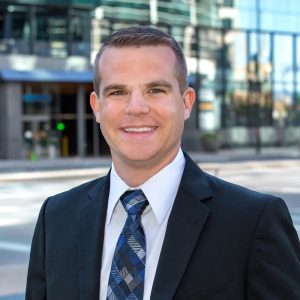
Mitchell Whitus – Defenders of Capitalism Newsletter Editor & Capital Idea Podcast Co-host
Mitchell is actively involved with the Defenders of Capitalism Project™ as the newsletter editor and cohosts the Capital Idea podcast with Mike Williams. He currently serves on the Board of the Leadership Program of the Rockies and is a consulting with a global technology research and IT advisory firm.