Defenders of Capitalism Newsletter​ – Spring 2026

Welcome to the spring issue of the Defenders of Capitalism newsletter. Each quarter, we examine economics, culture, and history through a simple but often neglected lens: the human mind as the source of value and prosperity.

In our spring issue, we explore the bipartisan obsession with eroding Americans’ property rights and the virtue of minding one’s business. Our goal is not to shout or persuade by volume, but to clarify—to examine the world as it is and defend the ideas of capitalism that make flourishing possible.

Quote of the Day

“Dost thou love life? Then do not squander time, for that is the stuff life is made of”

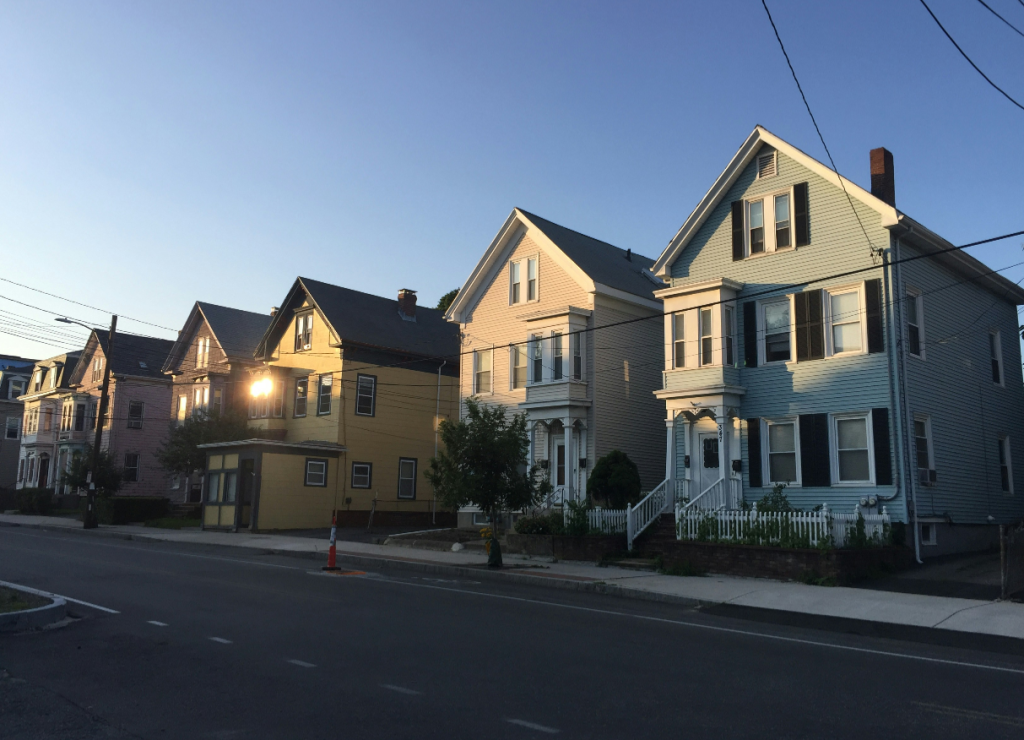
The ROAD to Housing Act: Paving Over Property Rights, One Regulation at a Time

Thinking right or wrong about housing requires putting respect for and protection of individual rights, including property rights, front and center

Picture of by Anders Ingemarson

by Anders Ingemarson

In a rare moment of bipartisan harmony, the U.S. Senate recently passed the 21st Century ROAD to Housing Act by a resounding 89–10 vote, a sweeping housing package intended to address America’s affordability crisis.

On paper, the bill promises relief for would-be homeowners and renters alike. In practice, it offers the illusion that government can fix a market by violating property rights.

Let’s take a short tour down this newly paved legislative road. One of the bill’s most attention-grabbing provisions limits large institutional investors from purchasing additional single-family homes once they control more than roughly 350 properties, and in some cases requires resale of certain purchases within several years.

Supporters frame the policy as protecting families from large investment firms. The slogan often heard is: Homes should belong to people, not corporations. A noble sentiment, you may think, but remember that corporations are, in fact, collections of people who voluntarily pool resources to buy things with the same individual rights, including property rights, as you and I.

The bill essentially declares that if you and 349 friends buy houses together, you’re fine. But if you and 350 friends do the same thing, you’ve apparently crossed into the moral territory of villainy and must now be handcuffed like a rogue criminal. It basically says that property ownership is fine, as long as you abide by the arbitrary limits set by the government. The immoral hubris of our elected representatives—both on the political right and left—and the ease by which they throw property rights under the bus, is illuminating.

Of course, the ROAD Act didn’t invent government involvement in housing. It merely joins a proud decades-long tradition of violating property rights. Consider zoning laws, which often dictate everything from how tall a building may be to how many families can live on a piece of land. In many cities, the most valuable land is legally restricted to single-family homes—meaning a property owner who wants to build apartments for dozens of families may be politely (or not) informed that the law prefers a lawn instead.

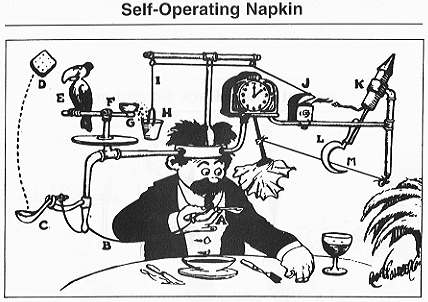
The result is a housing system that resembles a Rube Goldberg machine:
  1. Regulations make construction harder and more expensive.
  2. Housing becomes scarce and costly.
  3. Government introduces programs to make housing “affordable.”
  4. Those programs introduce new regulations that further complicate construction.
  5. Housing becomes even more scarce and costly.
  6. Rinse and repeat…

Housing shortages don’t appear out of thin air. They arise when demand grows faster than supply. In a free market, rising prices normally signal builders to construct more homes. But in heavily regulated markets, builders face layers of approval processes, environmental reviews, zoning restrictions, building codes, financing mandates, and compliance checklists long enough to qualify as doorstops.

The ROAD to Housing Act attempts to fix some of this by trimming certain regulations and encouraging development in places that build more homes. But it also introduces new federal restrictions—like the investor limits—that treat market participants less as voluntary actors and more as pieces in a statist game of chess. It’s a bit like removing traffic cones from a highway while installing speed bumps every 20 feet.

At the heart of the debate is a deceptively simple question: Who has the right to decide how a property is used—the owner, or the government?

If the owner decides, then a person should be free to build apartments, rent houses, or invest in housing projects as long as they respect the individual rights, including property rights, of others. No caps, no limits, no regulations, just a voluntary contract between individuals who recognize the mutual benefit of the transaction. If the government decides, then housing policy becomes an endless individual rights violating balancing act of mandates, quotas, and politically determined limits. The answer should be obvious.

The assumption behind the ROAD Act implies that housing markets cannot be trusted to coordinate supply, investment, and development without constant supervision. Investors are suspect, builders require incentives, and property ownership must occasionally be rationed for the “public good,” protection of property rights be damned.

The housing shortage is caused by too many rules rather than too few. The path forward must be paved with fewer new federal programs and more gradual retreat from decades of accumulated intervention at every level of government—federal, state and local. Here’s but a couple of suggestions that would move us towards separating government and housing by enforcing the protection of individual rights, including property rights:

1. Challenge Zoning in Court

When local zoning prevents owners from using their land as they see fit, and from building according to standards they choose—such as banning apartments on land suitable for them—such restrictions should be challenged in court as property rights violations. Over time, judicial scrutiny would dismantle the most restrictive local regulations, replacing bureaucratic planning with legal protections for ownership.

2. Simplify Building Regulations

Replace thousands of pages of compliance requirements with market driven, voluntary safety standards. And, of course, don’t pass the parts of the ROAD act that add insult to injury, such as the ownership cap. This would free the entire housing supply chain to innovate the use of both building materials, techniques, and processes over time increasing quality, reducing building times, expanding consumer choice and lowering prices.

The result wouldn’t be chaos. It would be something surprisingly ordinary: a housing market where builders build, investors invest, market-based watch dogs watch, and buyers buy—without needing permission slips from half a dozen federal, state and local government entities.

The irony of the 21st Century ROAD to Housing Act is that it recognizes one crucial truth: America needs more homes.

Where it falls short is in assuming that the same regulatory mindset that helped create the shortage is also the best tool for solving it. This only adds fuel to the fire. Markets are sometimes messy and unpredictable. But they have one advantage that central planners lack: they rely on millions of individual decisions rather than a single legislative blueprint.

If the goal is abundant affordable housing, the only reform needed is to trust the people who actually build and buy homes. After all, when individuals are free to create, invest, and trade property voluntarily, the housing market tends to produce something remarkable: Homes. Lots of them. For every wallet. And most importantly, the government can focus on its one legitimate role: protecting individual rights—including property rights.

For Your Consideration

Mind Your Business: A Small Coin... and a Big Idea

Picture of by Michael Williams

by Michael Williams

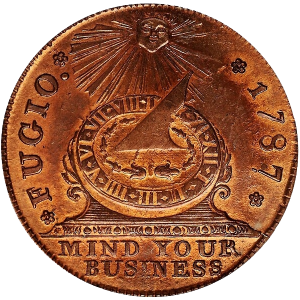
In 1787, the young United States minted one of its first coins.  It carried a motto that feels almost foreign today:

"Mind Your Business"

Alongside it was a sundial and a single word: “Fugio”—Latin for “I fly.” Put together, the message was simple and profound: Time flies. Mind your business.  This was not a throwaway phrase. It reflected a moral outlook at the heart of the American experiment—one grounded not in passivity or dependence, but in the active, deliberate use of one’s mind.
To “mind your business” in the 18th century did not mean “leave me the hell alone.” It meant something more like: Take responsibility for your life, apply your mind to productive effort, build, create, improve – Do not wait for others to act on your behalf. It was a call to agency – and more specifically, to independent thinking.

The Founding generation understood something essential: a free society depends on individuals who think, act, and produce. Political liberty without personal responsibility is fragile. But when individuals are free to use their minds—to pursue ideas, opportunities, and enterprises – something remarkable happens.
They create value.
They solve problems.
They trade.


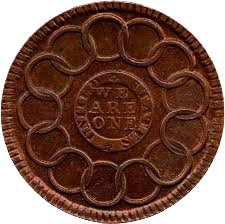
And in doing so, they build a society that is not merely free, but prosperous and increasingly more so.  The Fugio coin captured this ethic in miniature. It was, in a sense, a piece of everyday philosophy—circulating hand to hand, reminding citizens that their lives were their own to direct.  On the reverse side of the coin was another message: “We Are One,” surrounded by thirteen interlocking rings representing the states. If you ever want to see one, just ask—I carry a replica with me most of the time. It’s a small thing, but the message tends to stick.

The pairing is striking. On one side: individual responsibility. On the other: voluntary notion.

The implication is powerful: a unified society does not require the suppression of individuality. It depends on it. A nation of thinking, productive individuals can cooperate—not by force, but by choice. This is the essence of a free, commercial society. And it helps explain why the late 18th century marked the beginning of an unprecedented expansion in human prosperity. When individuals are free to apply their minds to production and exchange, wealth is not redistributed — it is created.

The Fugio coin quietly assumed this truth. It didn’t promise outcomes or guarantee security.  It issued no commands beyond a simple reminder: Use your time. Use your mind. Build your life.

Much later, the motto “In God We Trust” would appear on U.S. currency, reflecting different historical circumstances and cultural priorities. But the earlier message tells us something important about the spirit of the founding era. It was a spirit that placed confidence in the individual—in the capacity of human beings to think, to act, and to create.

A small copper coin carried that idea into the world. And it remains just as relevant today.

Time flies. Mind your business.

Capital Idea Podcast

Hosted by Michael Williams and Mitchell Whitus, Capital Idea explores the economic, historical, empirical, and moral case for capitalism. Capital Idea is an intelligent — sometimes irreverent — and entertaining discussion for honest people of all political persuasions who want to better understand the only moral economic system.

On a recent episode, Mike interviewed Sue Moore of Liberty Scorecard Colorado about why free markets depend on informed citizens, accountable lawmakers, and a culture that takes liberty seriously. They also explore a tougher question: are people on the Right as consistent about free markets and individual rights as they claim?

Why Defenders of Capitalism?

Defenders of Capitalism exists because the moral case for capitalism is rarely understood or stated clearly—and too often abandoned altogether.

Capitalism is not primarily about economics. It is a social system grounded in a simple truth: the human mind is the source of value, and freedom is the condition that allows it to function. When individuals are free to think, create, and trade voluntarily, abundance follows—not by decree, but by reason applied to reality.

This project is not about defending “the rich” or markets for their own sake. It is about championing the individual – the producer, builder, and creator—whose efforts make human flourishing possible. Defenders of Capitalism is also not a partisan project. The erosion of individualism, reason, and responsibility is not confined to the political left or right. Collectivism wears many costumes. We are interested in ideas, not tribes.

We reject the framing that treats capitalism as a moral compromise. A system grounded in voluntary exchange and individual rights is not at odds with human values—it depends on them. 

Meet the Team

Anders Ingemarson – Senior Research & Curriculum Advisor

Anders is an author, speaker and educator, he’s a champion of reason, rational self-interest, individual rights, limited government and capitalism. His book Think Right or Wrong, Not Left or Right: A 21st Century Citizen Guide is currently on its third edition.

Mitchell Whitus – Editor & Capital Idea Podcast Co-host

Mitchell is actively involved with the Defenders of Capitalism Project™ as the newsletter editor and cohosts the Capital Idea podcast with Mike Williams. He currently serves on the Board of the Leadership Program of the Rockies and is a consulting with a global technology research and IT advisory firm.

Krescent Williams – Head of Operations

Krescent leads operations for Defenders of Capitalism™, improving processes across marketing, events, and podcast production through data-driven problem-solving. With experience ranging from geochemistry research to music education to business operations, she brings both analytical rigor, business acumen, and creativity to the team.

Michael Williams – Founder & Director of Principles and Practice

Mike created the Defenders of Capitalism Project™ and is president of ALTIUS Financial, bringing decades of experience in investments, financial planning, capital markets, and applied economic philosophy. An international speaker and member of the Mont Pelerin Society, he serves on the boards of the Leadership Program of the Rockies and the Steamboat Institute.

Sign Up for Our Newsletter

Form Heading

Leave a Reply